

Technology, Funding & Operational Change in K-12: What District Leaders Need to Know
Presented by DataServ at OASBO’s 70th Annual Conference & Expo 2026
At the 2026 Ohio Association of School Business Officials Annual Conference, the DataServ team had the opportunity to present alongside experienced K-12 finance and operational leaders on a topic that continues to impact districts across Ohio: How technology, funding pressures, cybersecurity risks, and legislative change are reshaping district operations.
The conversation was not centered around “the latest gadgets” or emerging trends. Instead, it focused on something much more practical:
Technology has become deeply connected to instruction, finance, compliance, safety, and daily district operations. As a result, district leaders are increasingly being asked to think about technology not simply as an IT responsibility, but as an operational and financial planning priority.
Why Traditional Technology Models Are Becoming More Difficult to Sustain
Many districts still operate using technology support models that were designed for a much different environment.
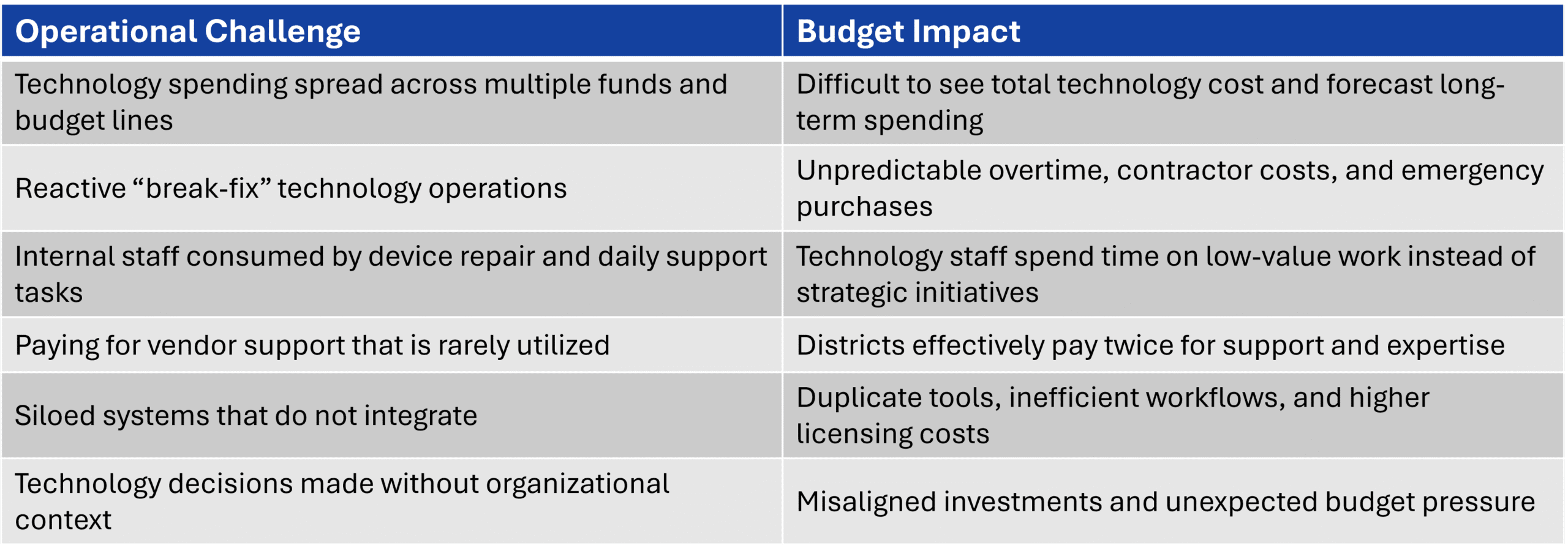
In the presentation, several common operational and budgeting challenges were discussed, including:
Limited Visibility Into Total Technology Costs
Technology spending is often spread across multiple budgets, departments, vendors, and funding sources. This can make it difficult to understand the district’s true technology spend or forecast future needs.
Reactive “Break-Fix” Operations
When districts are forced into reactive support models, unexpected outages, emergency purchases, and contractor costs can create financial instability.
Staff Bandwidth Challenges
Internal technology staff are frequently consumed by day-to-day support requests, device issues, and operational firefighting. This limits the time available for strategic initiatives and long-term planning.
Siloed Systems and Redundant Tools
Disconnected systems and overlapping platforms can create workflow inefficiencies, duplicate costs, and unnecessary complexity.
Technology Decisions Without Organizational Context
Technology investments are most effective when aligned with district-wide operational and financial goals. Without that alignment, districts can experience budget strain, fragmented initiatives, and inconsistent outcomes.
These challenges are becoming increasingly common as technology environments continue to grow in complexity.
Legislative and Cybersecurity Pressures Continue to Grow
Another major focus of the session was the growing operational pressure districts are facing from cybersecurity and compliance requirements.
Ohio districts are navigating:
- Evolving cybersecurity expectations
- Increased accountability around operational resilience
- Budget pressure tied to infrastructure modernization
- Growing concern around staffing and expertise gaps
District leaders are increasingly being asked to answer questions such as:
- Do we understand our operational risk?
- Can we sustain our current technology model?
- Are we budgeting proactively or reactively?
- Do we have the internal capacity needed long-term?
- How do we align technology planning with financial planning?
These are no longer isolated IT questions. They are organizational planning questions.
The Shift in Thinking: From Reactive Support to Intentional Operations
One of the core themes of the presentation centered around a broader shift taking place in K-12 operations.
Rather than treating technology as a collection of devices and support tickets, districts are beginning to rethink how technology operations are structured and managed.
This includes:
- Designing operations around the end-user experience
- Identifying workflow bottlenecks and inefficiencies
- Improving responsiveness and operational consistency
- Creating clearer ownership and accountability
- Aligning technology initiatives with district priorities
The conversation is shifting from:
“How do we fix problems when they happen?”
to:
“How do we build sustainable operations that reduce disruption in the first place?”
That operational mindset change is becoming increasingly important as districts work to balance service expectations with staffing and budget realities.
Practical Next Steps for District Leaders
The session also included practical recommendations districts can begin evaluating now.
Operational & Organizational Planning
Districts should consider:
- Itemizing technology contracts and recurring costs
- Mapping operational workflows to identify inefficiencies
- Clarifying leadership ownership for technology planning
- Leveraging peer collaboration and external expertise where appropriate
Financial Planning
Districts should also evaluate:
- Legacy costs and unused subscriptions
- Strategic use of E-Rate opportunities
- Multi-year lifecycle and infrastructure planning
- Long-term cybersecurity budgeting
- Alignment between technology investments and financial forecasting
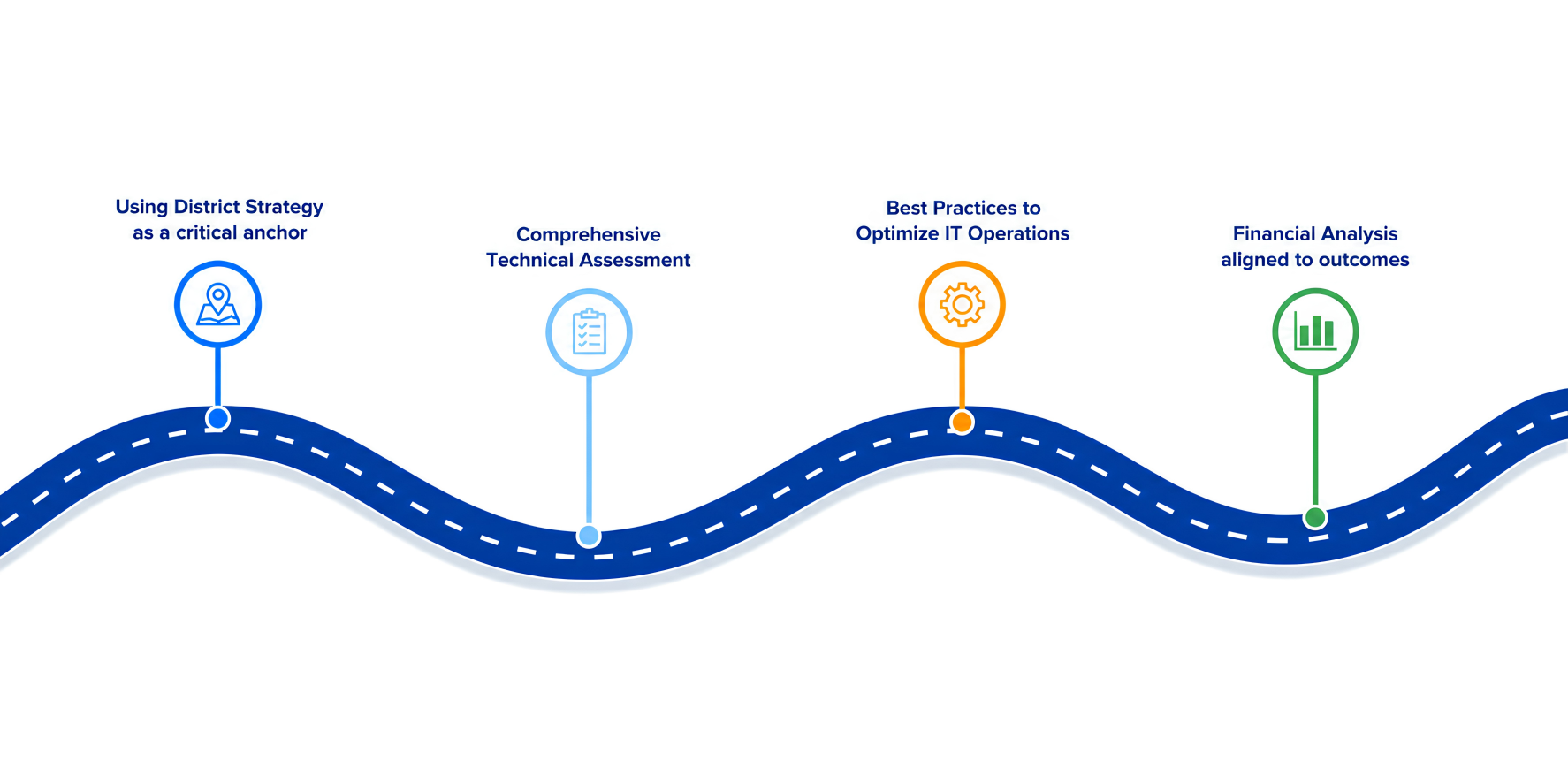
None of these changes happen overnight. However, building visibility and structure around technology operations can help districts create more predictable outcomes over time.
Moving Forward
Technology environments will continue to evolve. Funding models, compliance expectations, cybersecurity risks, and operational demands will continue evolving alongside them.
For district leaders, the question is no longer whether technology impacts operations.
The question is how districts can create sustainable, resilient operational models that support students, staff, and long-term organizational goals.
At DataServ, these are the conversations we continue having with districts across Ohio every day.
We appreciated the opportunity to connect with so many school leaders at the 2026 OASBO conference and look forward to continuing the conversation.